
Play Areas
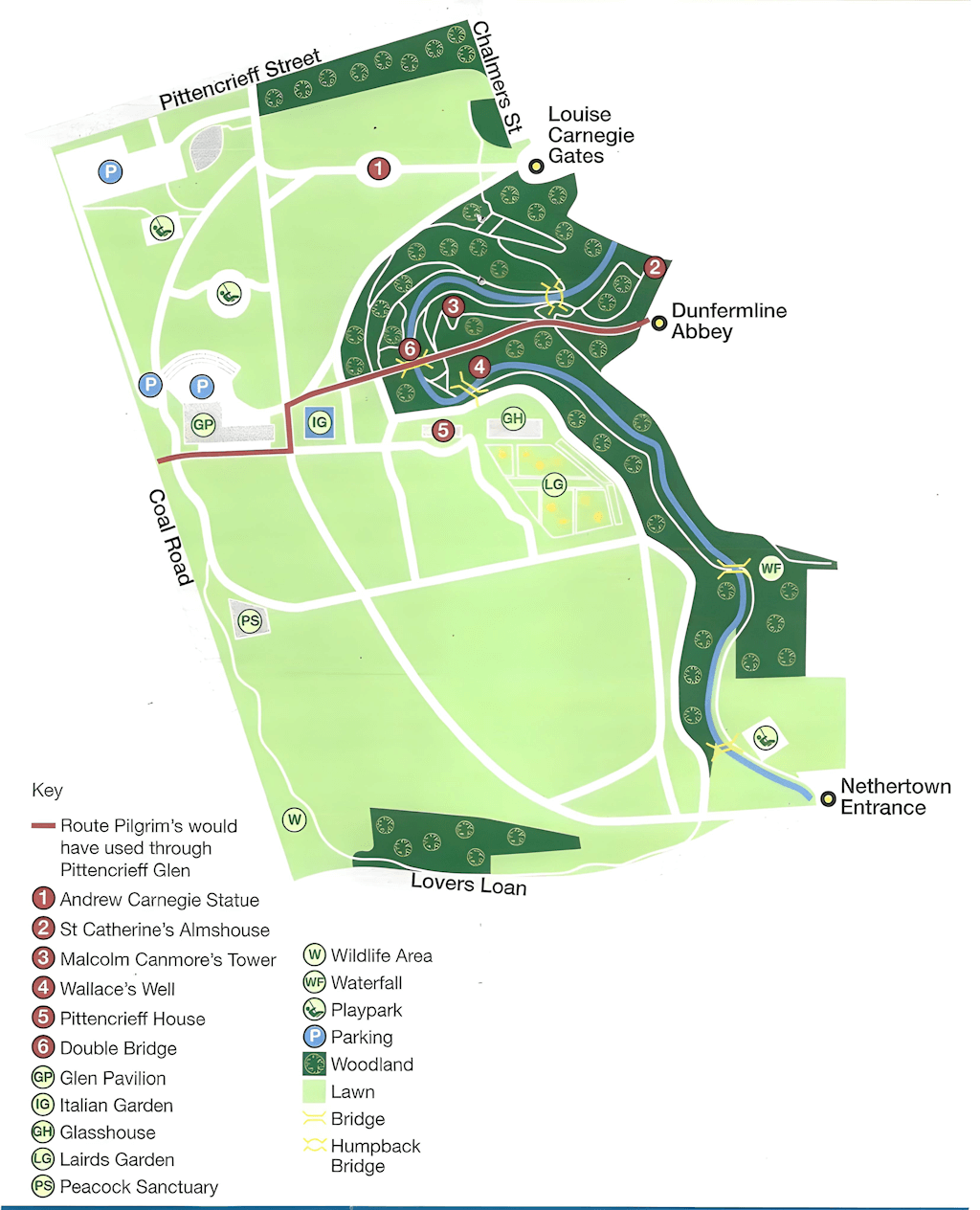
There are three play areas within Pittencrieff Park:
- two between the Pittencrieff Street entrance and the Glen Pavilion
- one at the Nethertown entrance
The parks are equipped with chutes, swings, climbing frames and roundabouts and all have safety surfacing.
The play area near the Pittencrieff entrance was provided to celebrate the centenary of the Carnegie Dunfermline Trust, and was opened by Her Royal Majesty the Queen in June 2003.
Walks
There are many kilometres of paths and walkways for visitors to enjoy within the park.
Rubbing trail
There are 10 brass rubbing plaques each with a different design, located throughout the park. All you need is one of our specially designed booklets and some coloured crayons or pencils, and you're ready to go.
Wildlife spotting
The Park is a natural habitat for hundreds of species:
- The Laird’s Garden is a good sun trap and as a result is a great place to see butterflies and bees
- The lower glen and Tower Burn area are home to semi natural ancient woodland which provides a great habitat for trees such as Lime and Horse Chestnut, birds including Grey Wagtails and Wrens as well as Velvet Shank and Candle-snuff Fungi
Copies of our “Wildlife and Nature” leaflet are available from the Glen Pavilion and the Glasshouse as well as other facilities in Dunfermline.
Historical walks
There are many historical features and stories to be discovered and explored:
- Pittencrieff House
- the Glen Pavilion
- the Double Bridge
- the Andrew Carnegie Statue
- the Louise Carnegie Gates
- Malcolm Canmore’s Tower
- Wallace’s Well
- the Dovecot
Views of Dunfermline Abbey can be found on the east side of the park – in fact one of the main entrances is found next to the Abbey and the walkway that leads from these gates crosses the Double Bridge and takes you into the centre of the park
If you are walking down in the lower glen, make sure you stop and look up to see the impressive ruins of Dunfermline Palace where several Kings of Scotland were crowned and some of them lived during their reign.
Tree trail
There are thousands of trees in Pittencrieff Park. Some of them are native species and form part of the semi natural ancient woodland, while others have been brought here from around the world.
Woodland areas can be found alongside the Tower Burn, in the southern reaches of the park and to the north east of the Louise Carnegie Gates, where the Dovecot can also be found.
You can also enjoy:
- the spring blossom of cherry trees that line the main path from Pittencrieff Street into the park
- the avenue of limes that leads to the Andrew Carnegie Statue
- the mixture of trees of the world, including the Giant Sequoia from California and the Monkey Puzzle tree found in front of Pittencrieff House
Finger posts have been installed throughout the park to highlight routes of particular interest and to direct park users to notable features.
